Laspur Heritage Museum
Over 100 artifacts spanning a millennium of Chitrali heritage
Five Decades of Collecting
For over five decades, Amir Ullah Khan Yaftali traversed the valleys of Chitral, Ghizer, and Central Asia — gathering artifacts that told the story of a civilization shaped by trade routes, mountain passes, and the resilience of its people.
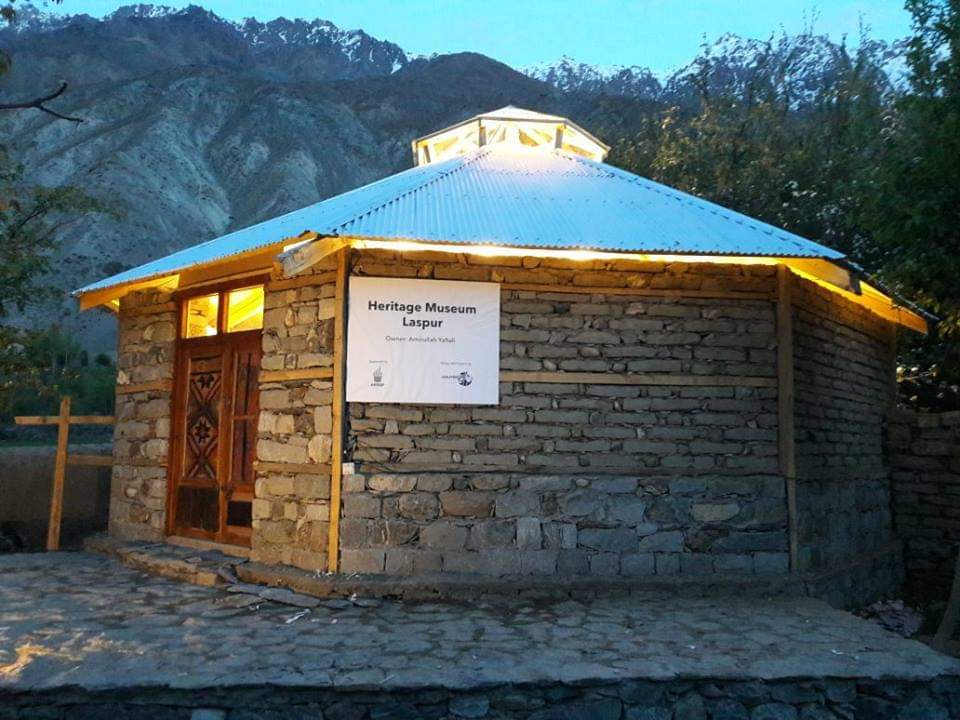
In May 2018, this lifelong collection found its permanent home in a purpose-built museum in Harchin Village, Laspur Valley. Designed by architect Zahra Hussain and Abdullah Aslam of Laajverd, with support from SDC and AKRSP, the museum features the punjetan architectural pattern — five columns of deep spiritual significance to the local Ismaili community — with a central skylight following customary natural lighting traditions.
Today, the Laspur Heritage Museum stands as the first institution of its kind in the Chitral-Gilgit-Baltistan corridor — a permanent record of a civilization that spans a millennium.
Walking Through History
The museum houses over 100 carefully documented artifacts organized across seven distinct collections — each occupying its own thematic room within the building. Together, they form a living timeline of Chitrali civilization from the 11th century to the modern era.
From weaponry that defended mountain kingdoms to pottery shaped by hands a thousand years ago, every artifact carries within it the voice of a community, a craft, a way of life that might otherwise have been lost to time.
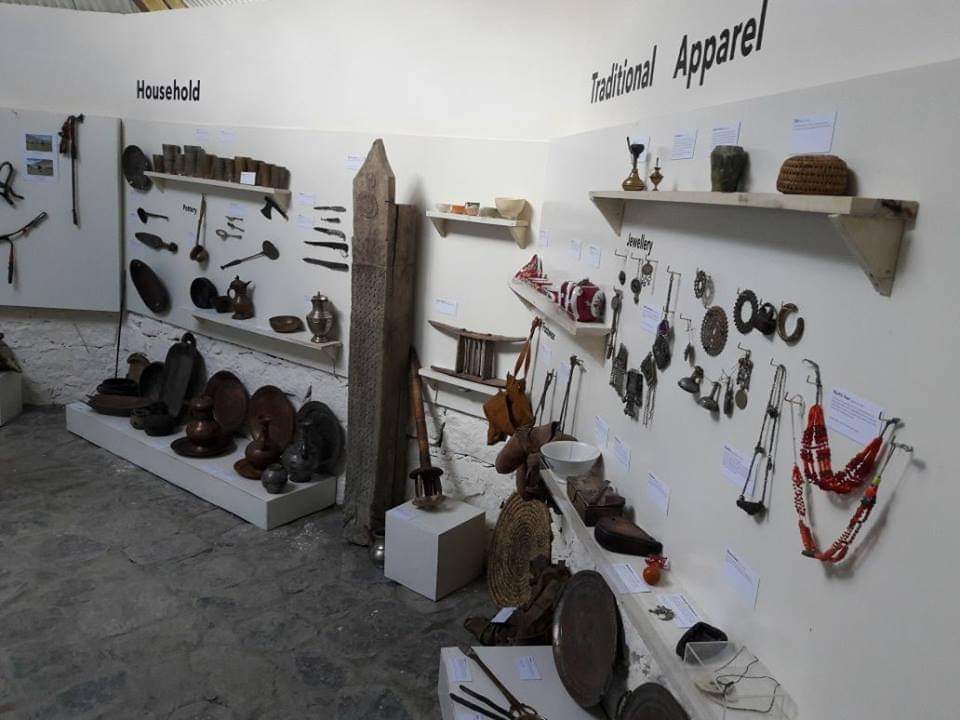
The seven collections span weaponry and defense, polo equipment and horse gear, musical instruments, agricultural tools, textiles and apparel, pottery and ceramics, and woodcraft and household items.
Take a Video Tour
Step inside the Laspur Heritage Museum from anywhere in the world. This guided tour walks you through all seven collections.
Seven Rooms, One Civilization
Each room in the museum is dedicated to a category of artifacts that together paint a complete portrait of Chitrali mountain life.
 Collection I
Weaponry & Defense
Arms of the Hindu Kush
16th – 19th Century
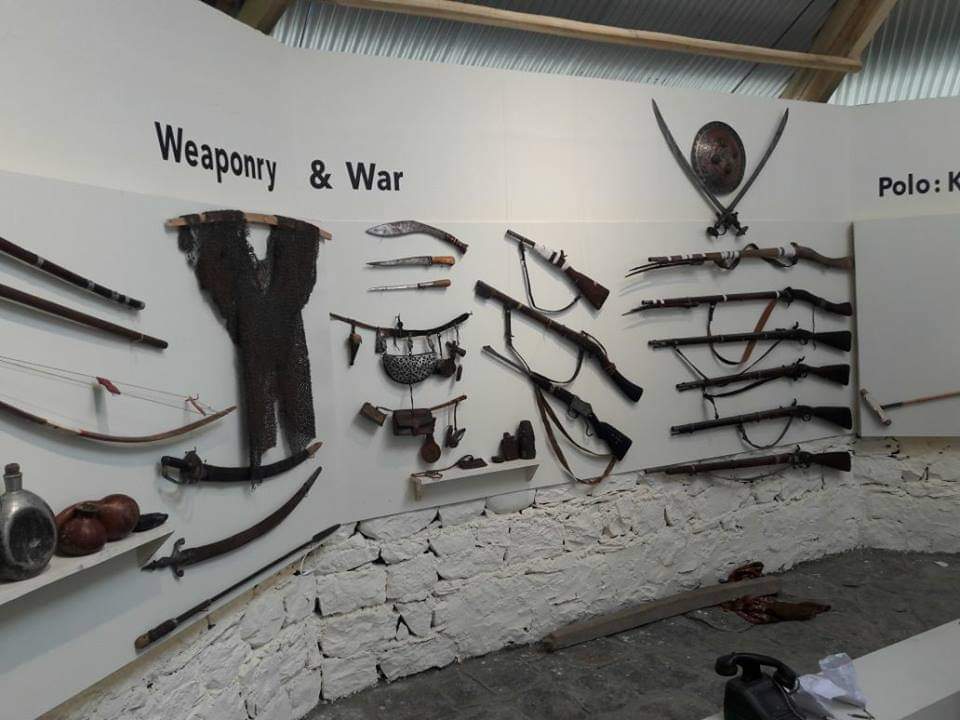
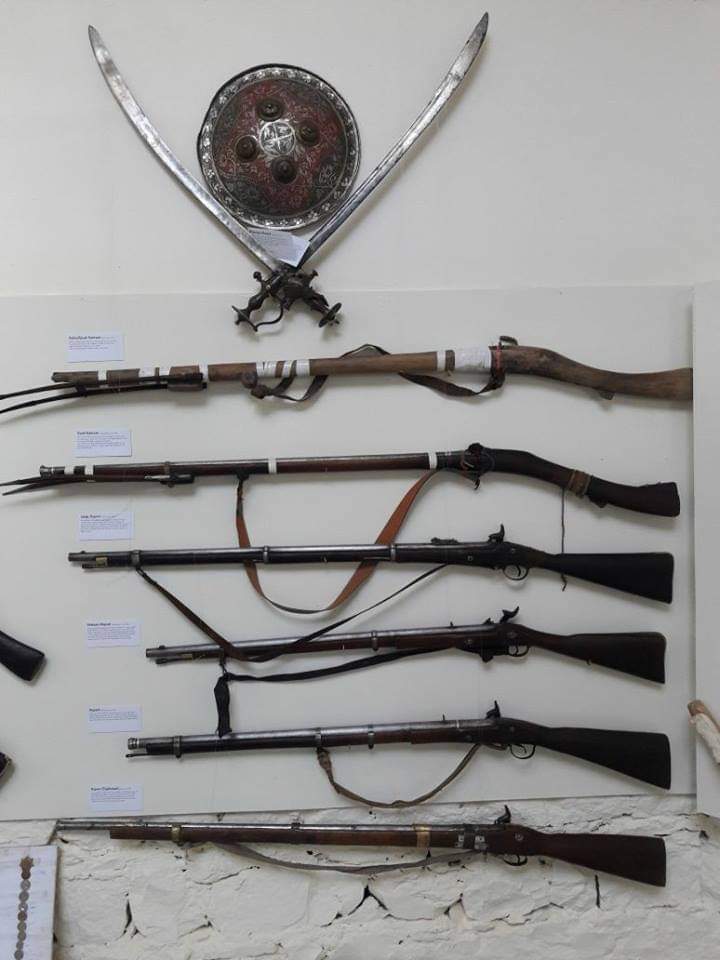
Gunpowder containers etched with Persian calligraphy, flintlock pistols forged in mountain workshops, and swords that once hung from the belts of Chitrali nobility — this collection speaks to an era when Chitral’s princes defended their sovereignty against empires and rivals alike.
 Collection II
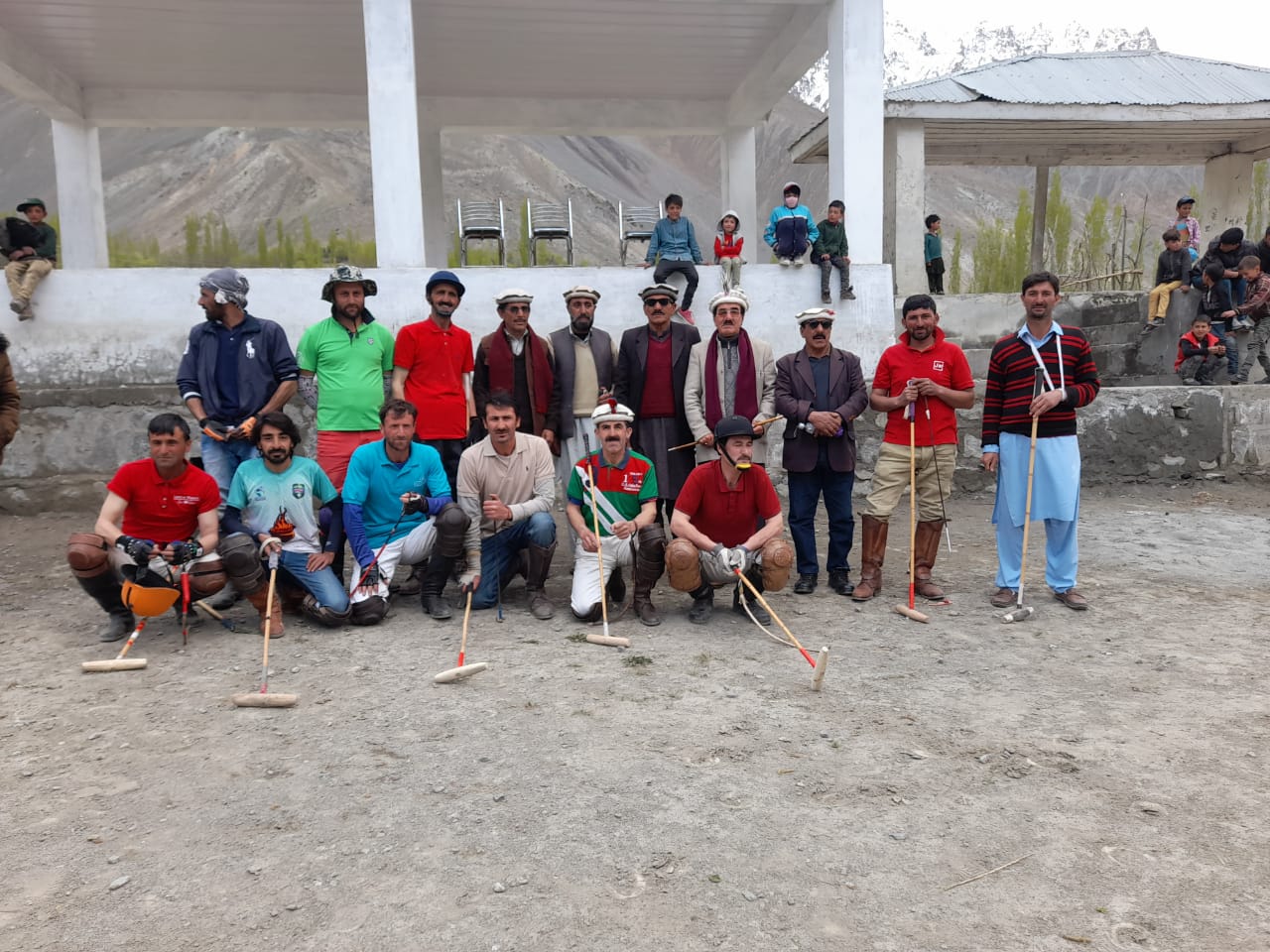
Polo Equipment & Horse Gear
The Game of Kings
17th – 20th Century
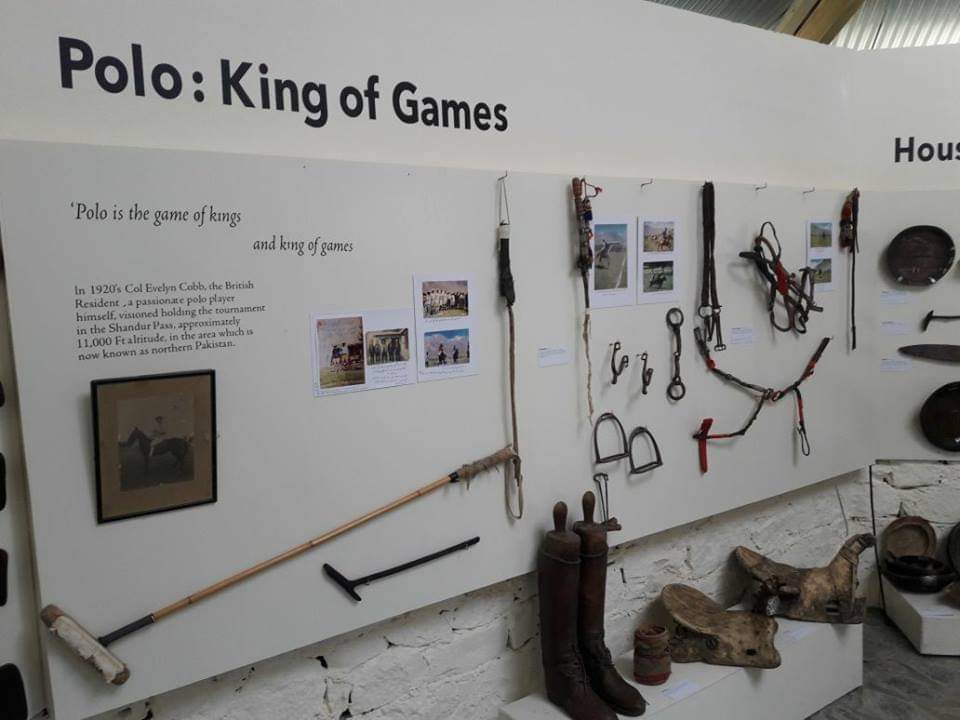
Mallets carved from mulberry wood, leather saddles shaped by generations of riders, and ceremonial horse trappings adorned with silver — these artifacts preserve the raw essence of the ‘Game of Kings’ as played in the world’s highest polo ground.
 Collection III
Musical Instruments
Melodies of the Kho
18th – 20th Century
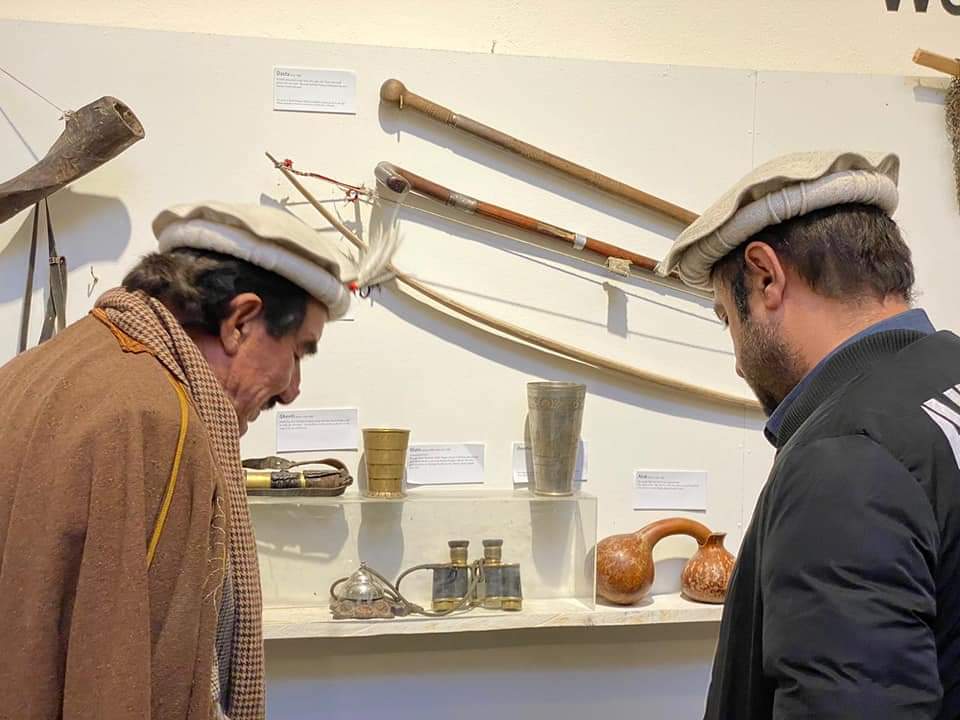
The sitar, the rubab, the surnayi — instruments that have carried the melodies of the Kho people through centuries of celebration, mourning, and spiritual devotion in the high valleys of the Hindu Kush.
 Collection IV
Agricultural Tools
Farming at 8,000 Feet
17th – 20th Century
At 8,000 feet above sea level, farming demanded ingenuity that lowland communities could scarcely imagine. Hand-forged ploughshares, threshing boards, and irrigation tools reveal how mountain people turned glacial meltwater into sustenance.
 Collection V
Textiles & Apparel
Woven Identity
18th – 20th Century
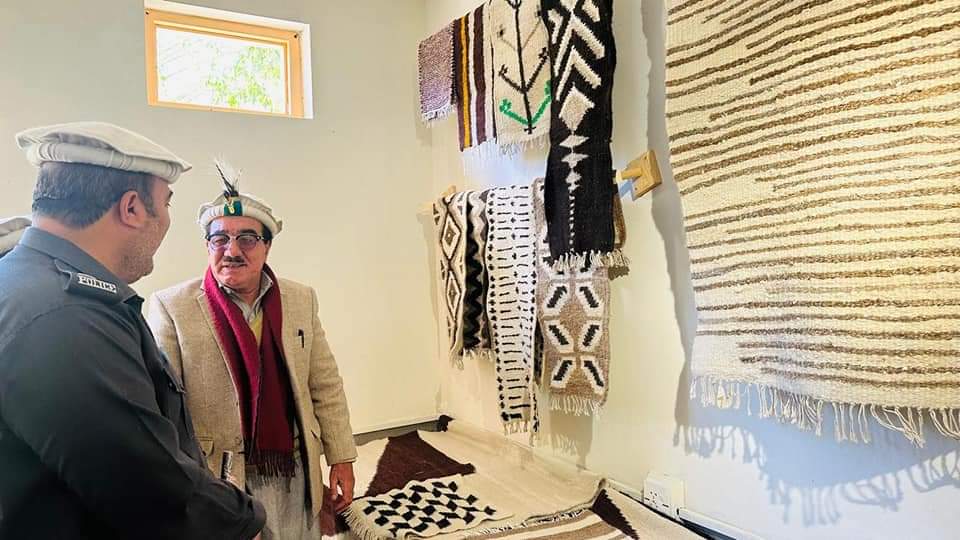
The chogha — Chitral’s iconic long woolen cloak — along with embroidered caps and hand-loomed shawls: these were not merely garments but declarations of identity, worn by shepherds and princes alike across the seasons of the Hindu Kush.
 Collection VI
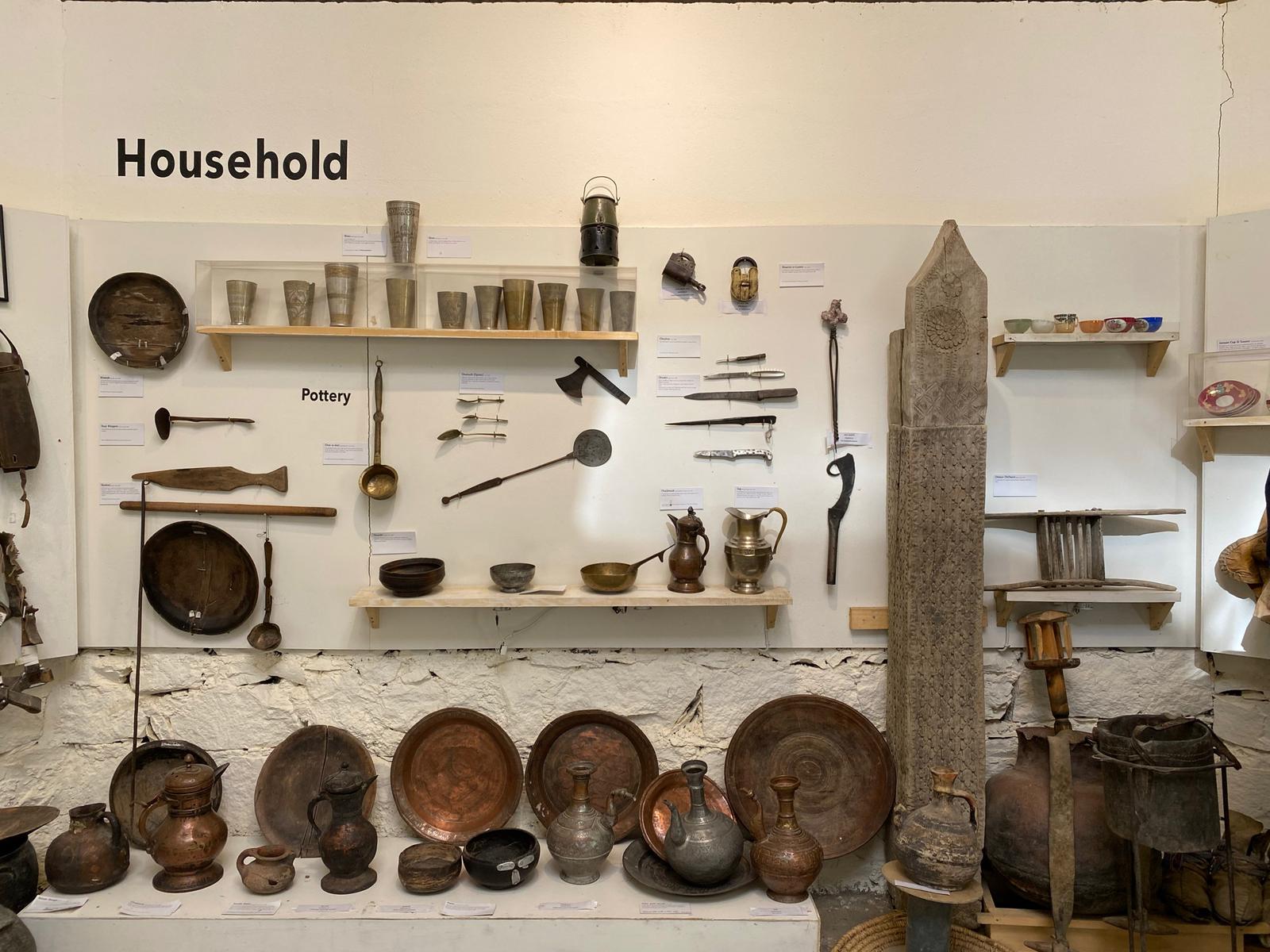
Pottery & Ceramics
The Oldest Voices
11th – 18th Century
The oldest artifacts in the collection: clay vessels dating to the 11th century, bearing forms and glazing techniques traced to Central Asian trade routes that once threaded through these very passes.
 Collection VII
Woodcraft & Household Items
The Mountain’s Art
17th – 20th Century
The supreme art form of Chitrali mountain culture. Carved window frames, door lintels, and household items whose geometric patterns carry cosmological meaning — each piece a meditation in wood by artisans who worked without blueprints.
Help Preserve a Millennium of Heritage
Your contribution supports artifact conservation, digital archiving, and the continued operation of Chitral's first heritage museum — ensuring these stories endure for generations to come.